
What Does Fluorite Do for Mental Clarity?
Fluorite is widely chosen for mental clarity and cognitive organization. As calcium fluoride crystallizing in the isometric system, its cubic symmetry mirrors structural order and disciplined thought.
Collectors and professionals select Fluorite to:
- Strengthen focus during complex tasks
- Support analytical problem-solving
- Reduce mental distraction
- Encourage structured planning
It aligns with precision, composure, and intellectual refinement.
How Does Fluorite Compare to Amethyst for Focus?
Both Fluorite and Amethyst are associated with clarity, yet their mineralogy differs. Fluorite forms cubic and dodecahedral crystals with pronounced cleavage, while Amethyst is a quartz variety with trigonal growth and silicon dioxide composition.
For refined selection:
- Choose Fluorite for structured, task-driven focus
- Choose Amethyst for emotional balance and intuitive awareness
Fluorite organizes the mind. Amethyst moderates perception.
Why Choose Tanzanite Fluorite for Maximum Clarity?
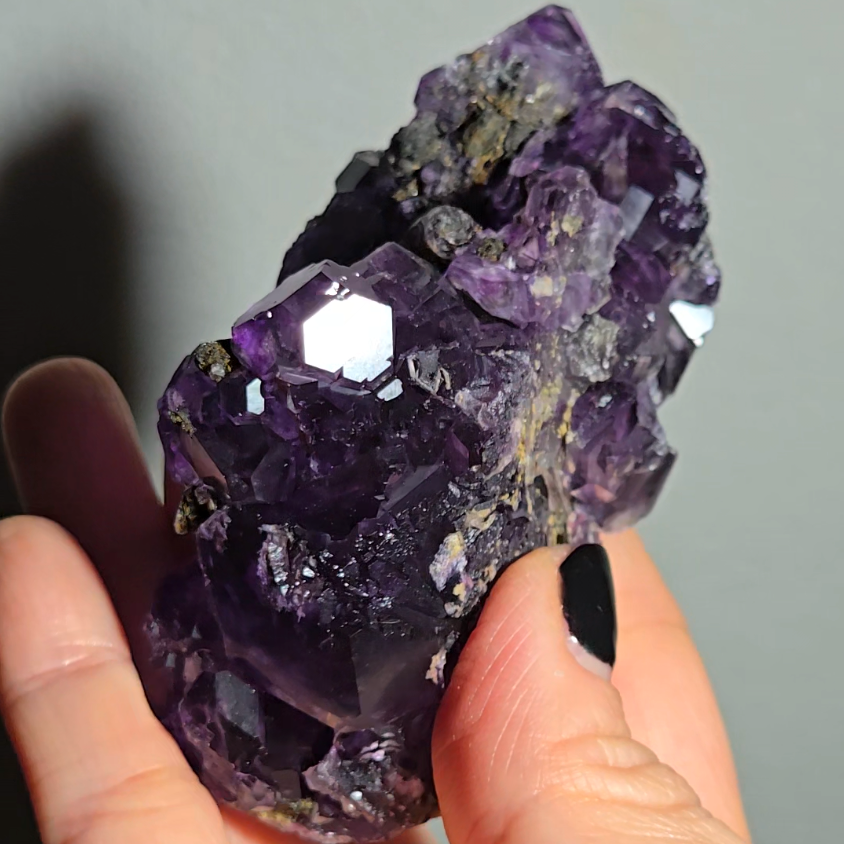
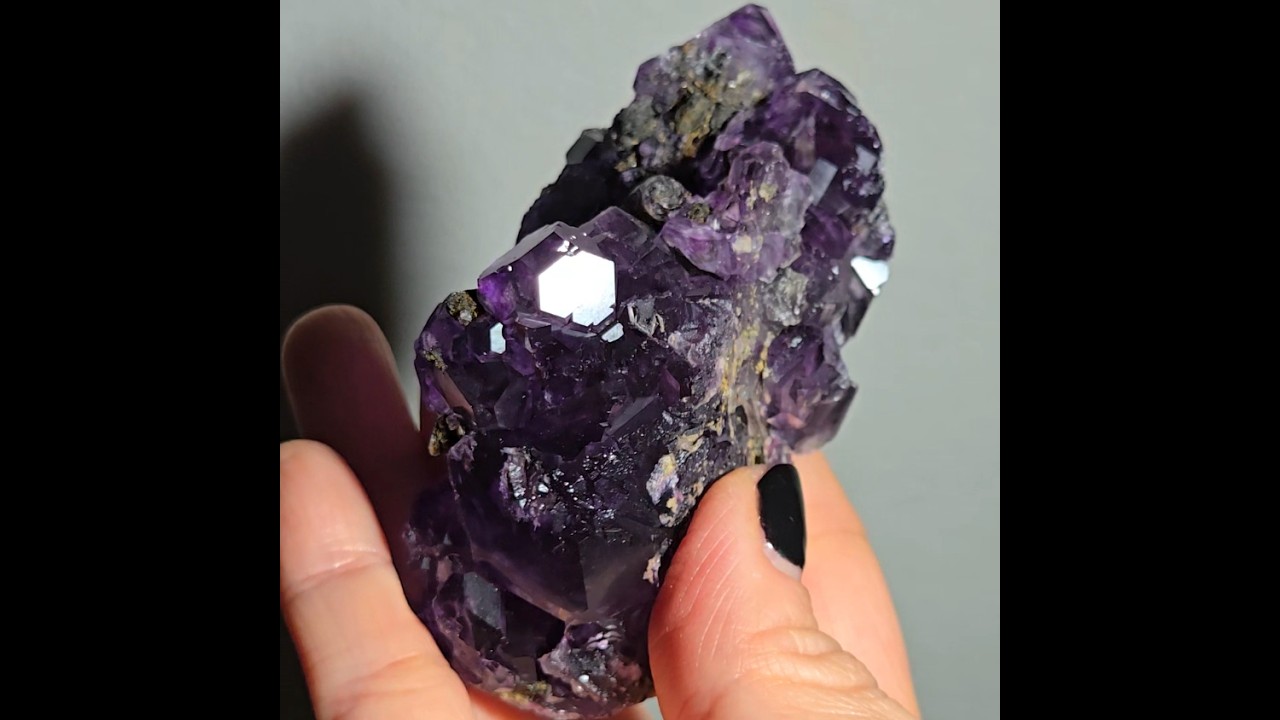
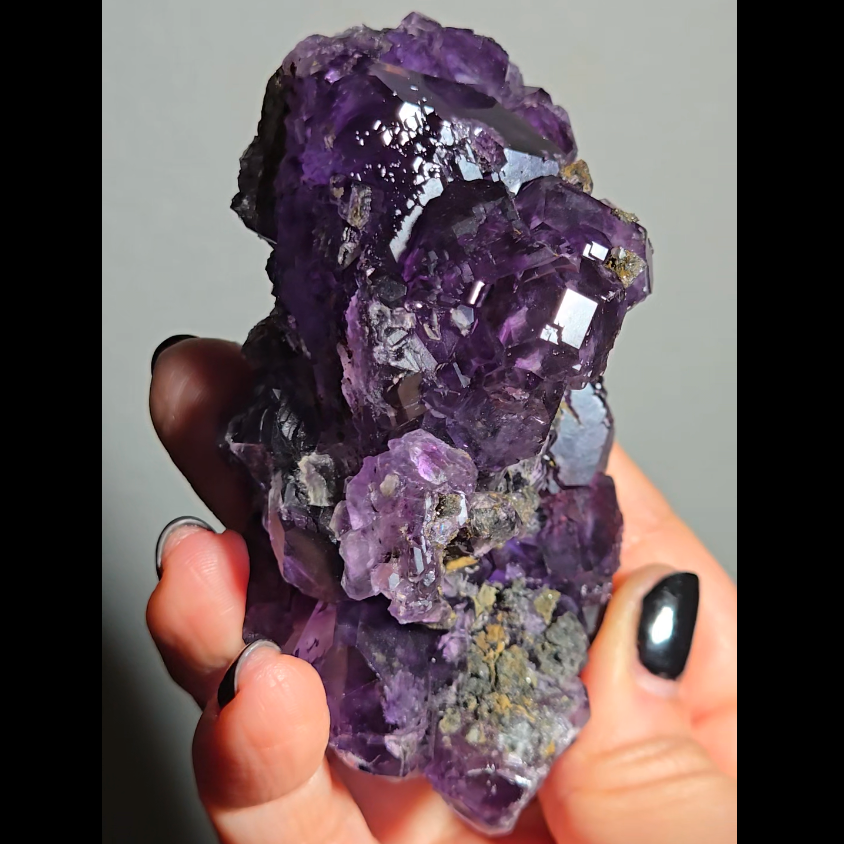
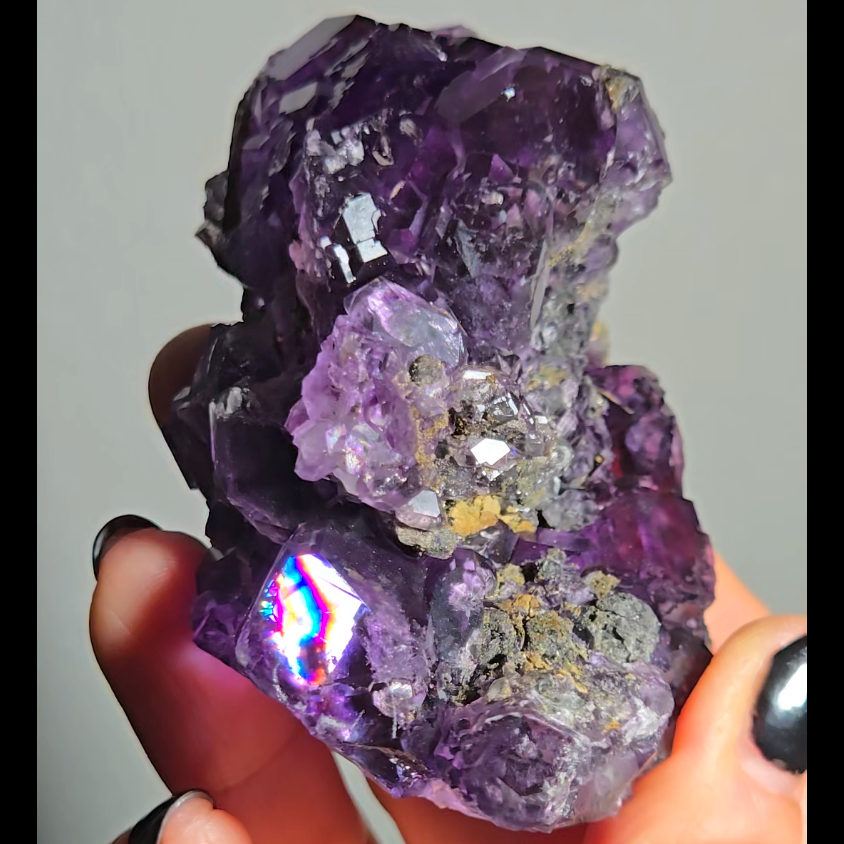
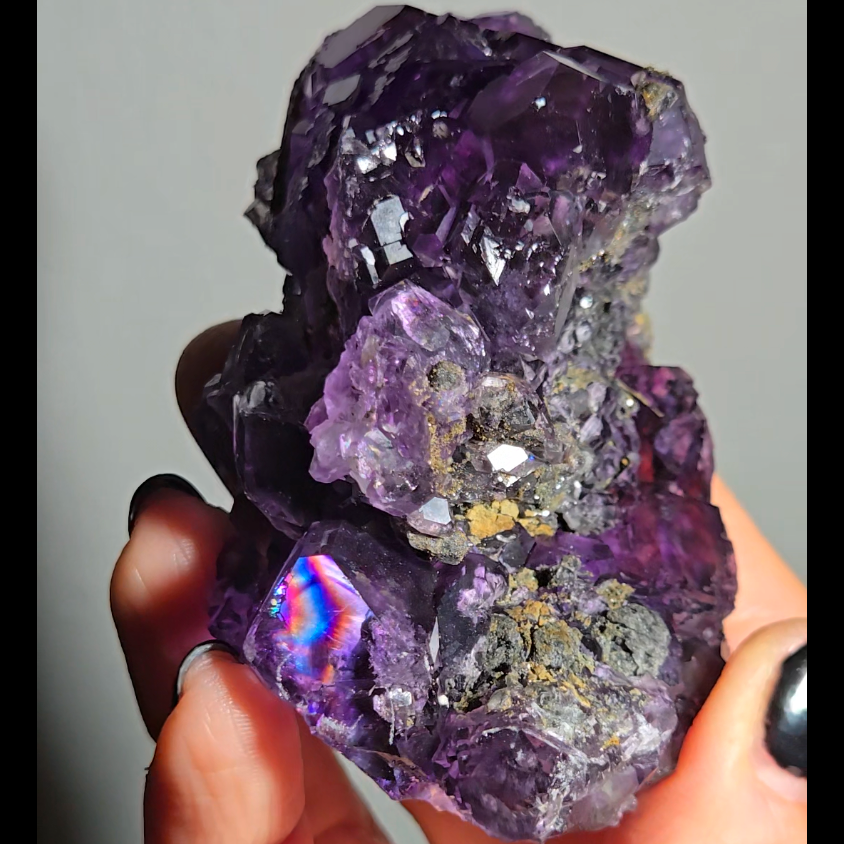
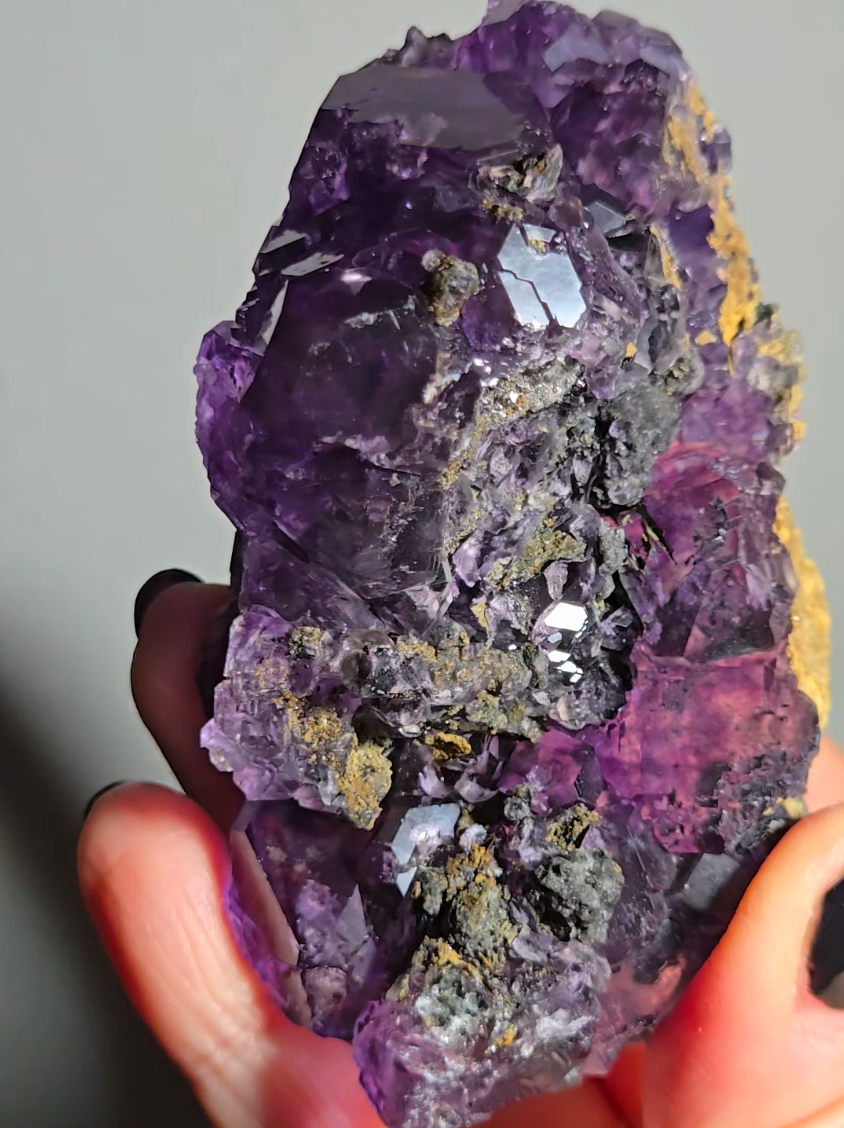
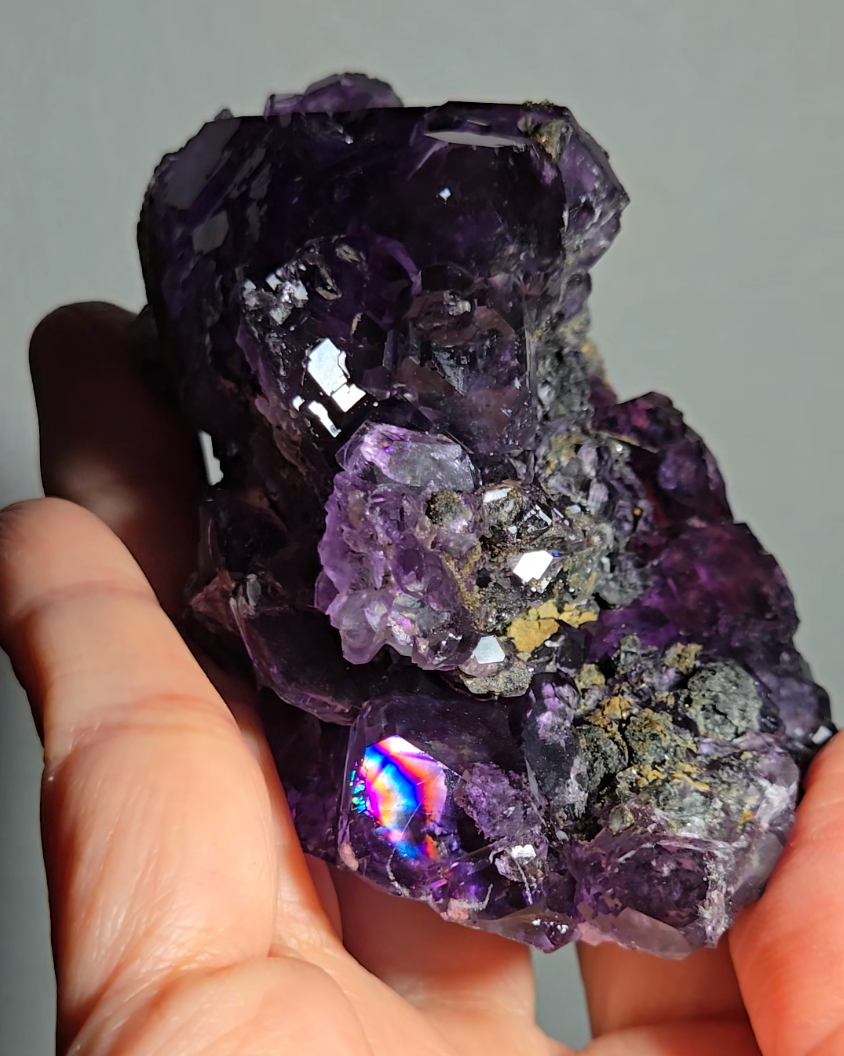
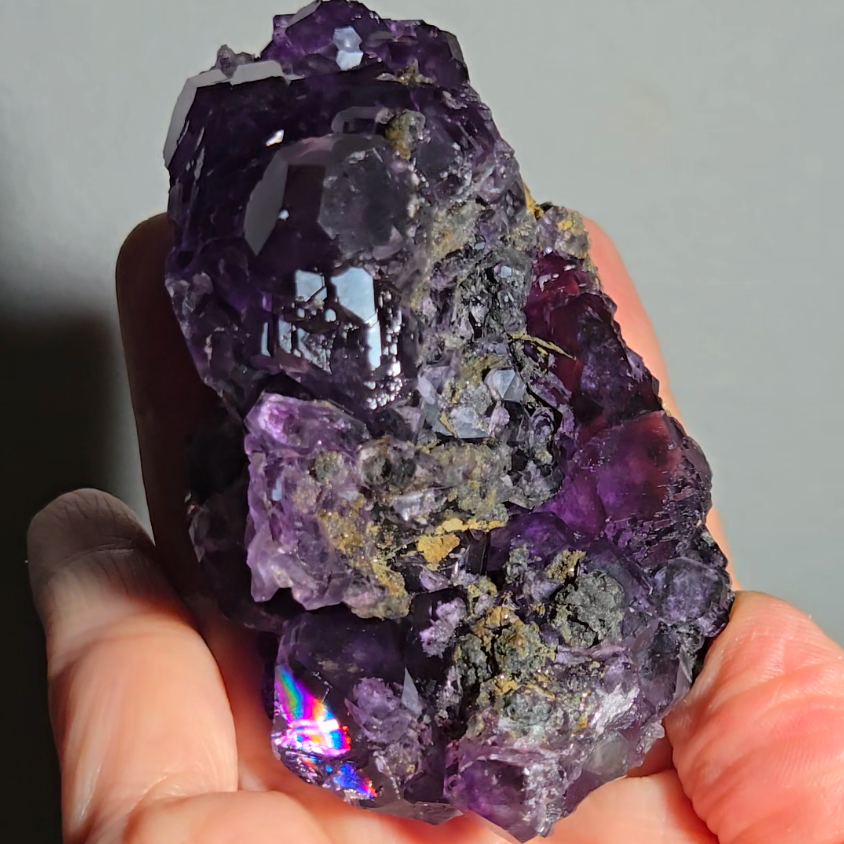
Tanzanite Fluorite is valued for saturated violet coloration and sharply defined geometry. The presence of dodecahedral modifications and visible internal rainbows indicates uninterrupted growth and natural internal stress planes that refract light.
Collector-focused advantages include:
- Defined cubic and dodecahedral faces
- Internal rainbow dispersion under light
- Rich purple saturation
- Natural matrix contrast enhancing dimensionality
These attributes reinforce mineral authenticity and elevate display presence.
How to Use Fluorite for Focused Work and Study?
Fluorite performs best in environments requiring intellectual discipline and organized execution.
Recommended applications:
- Placement on a desk during study or strategic planning
- Use in meditation for mental alignment
- Display in a professional workspace to reinforce clarity
- Integration into a geometry-focused mineral collection
It supports deliberate, composed engagement.
Key Questions About Fluorite Properties and Uses
What causes rainbows in Fluorite?
Internal fractures and cleavage planes refract light, creating natural rainbow dispersion within the crystal.
Is Tanzanite Fluorite natural?
Yes. Its purple coloration forms during crystal growth in fluorine-rich hydrothermal environments.
Are dodecahedral formations significant?
Well-formed faces indicate stable crystallization and increase collector desirability.
Is Fluorite suitable for daily handling?
Fluorite is softer than quartz and should be handled carefully to protect edges.
Who selects Fluorite clusters with rainbows?
Collectors and professionals seeking clarity, geometry, and light-reactive mineral specimens.