

What does azurite do for communication?
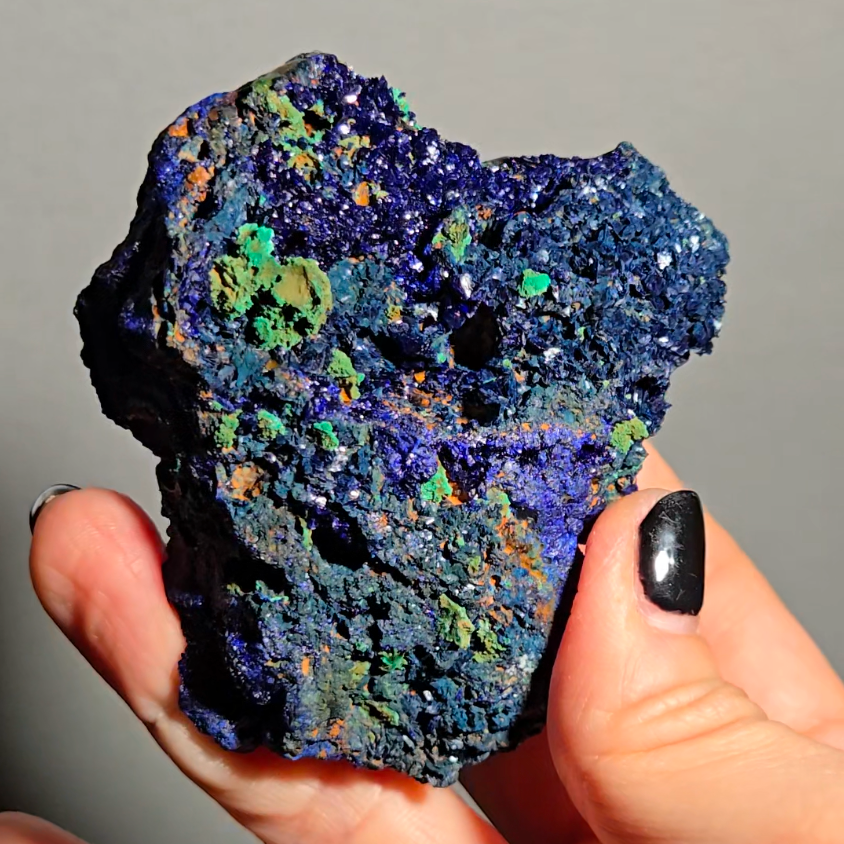
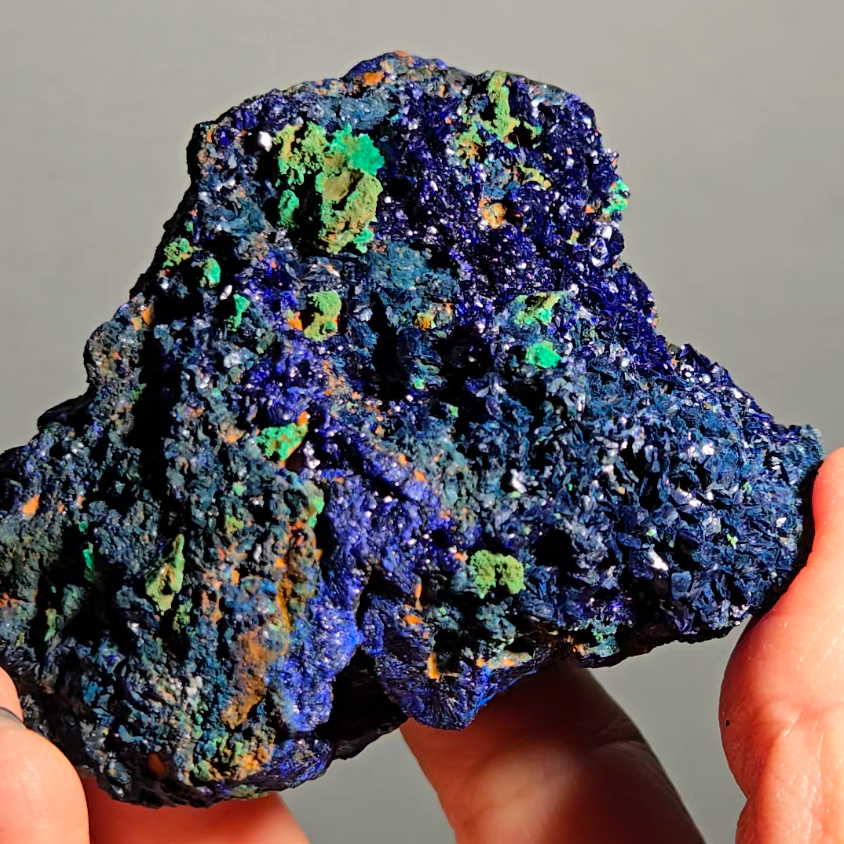
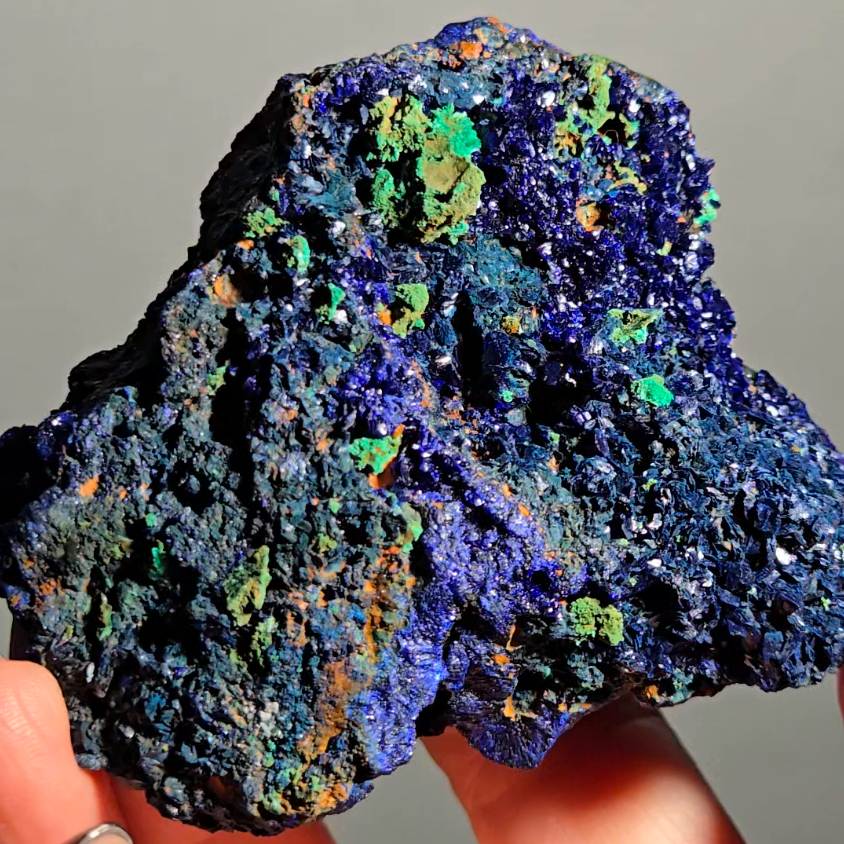
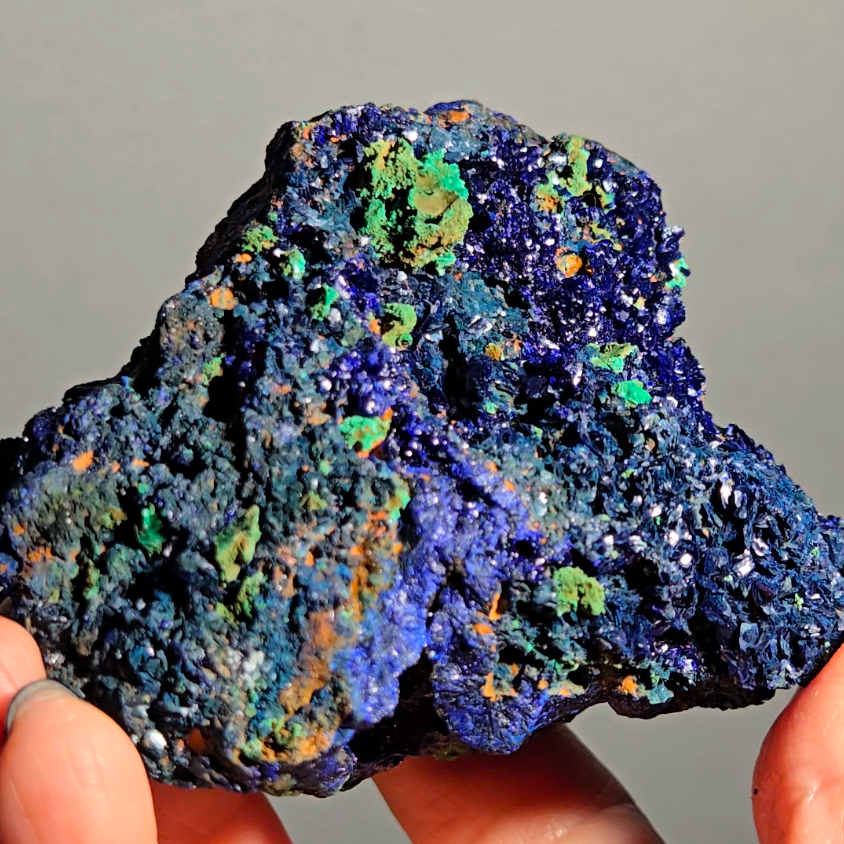
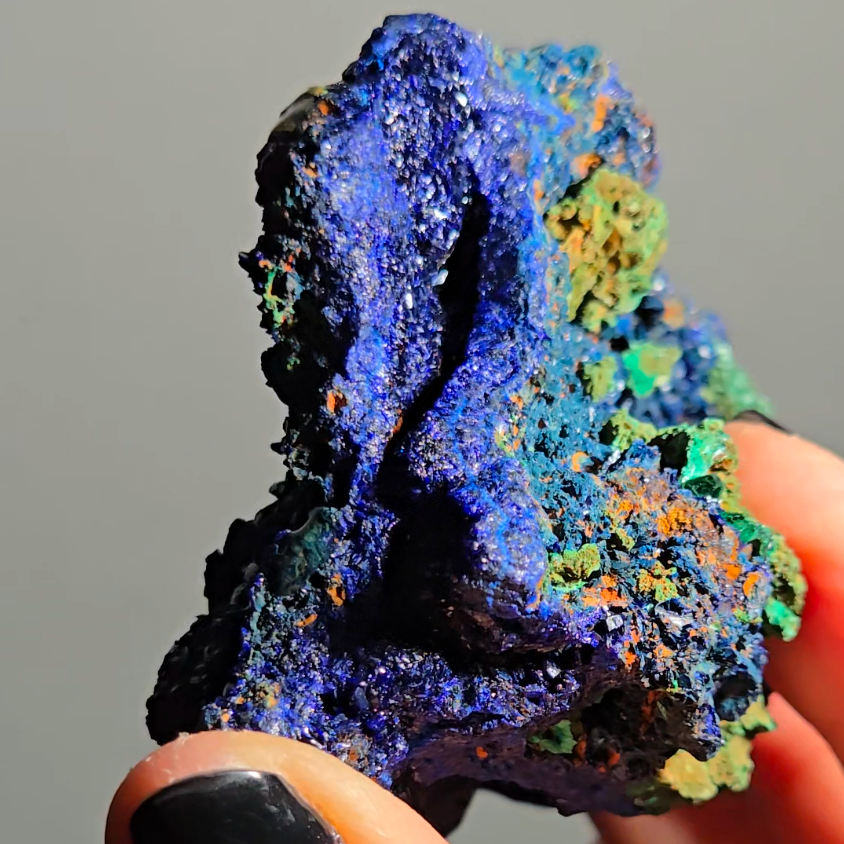
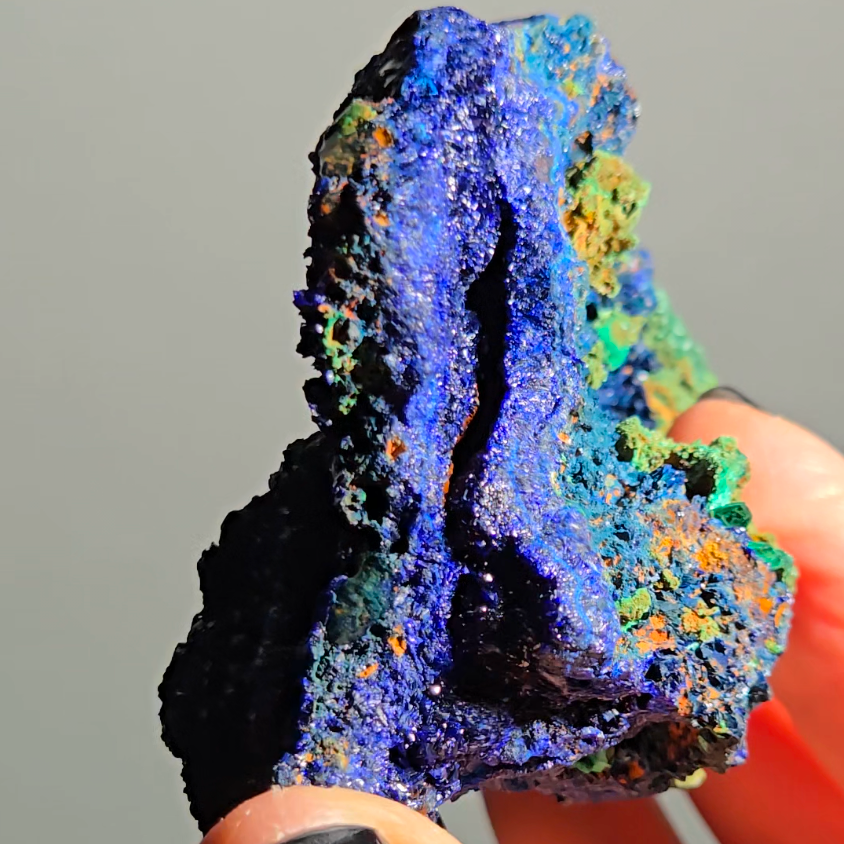
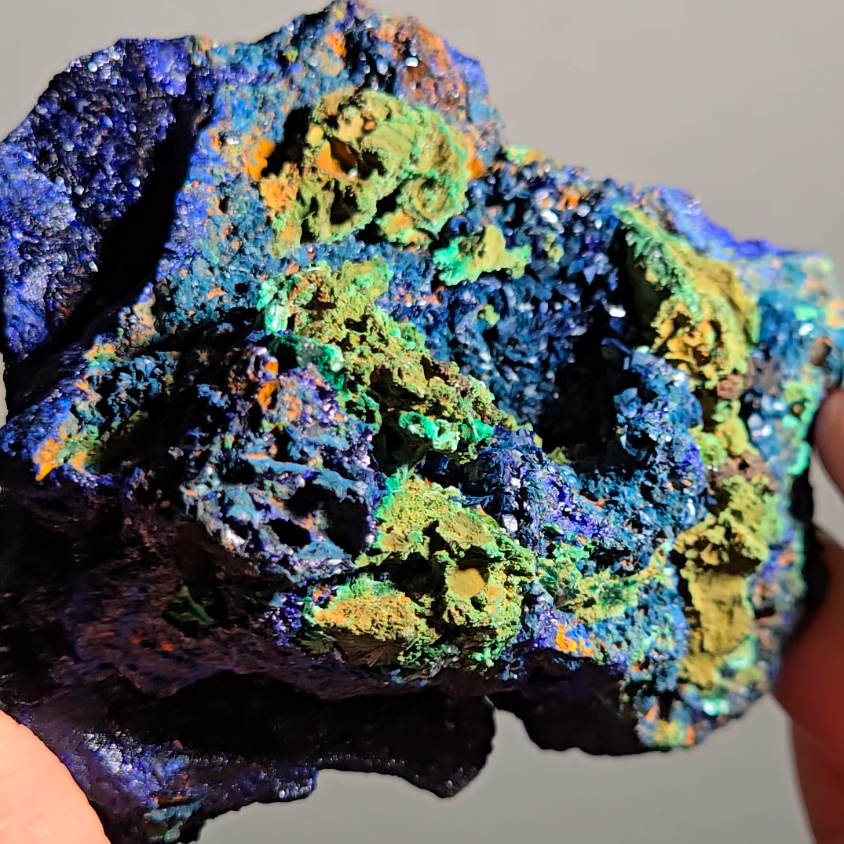
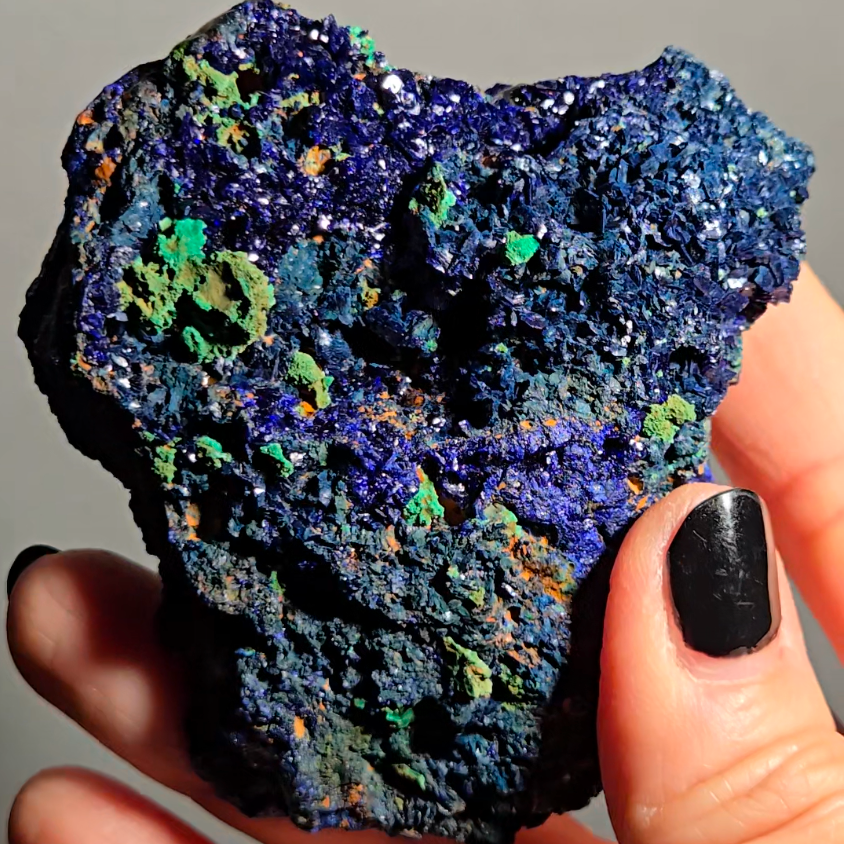
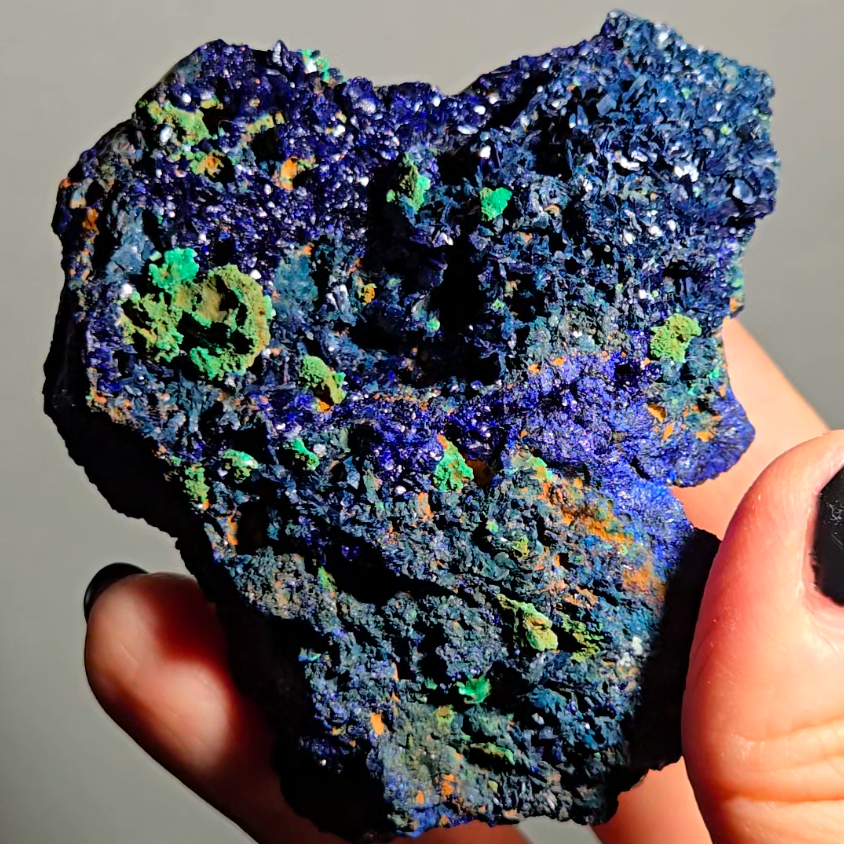
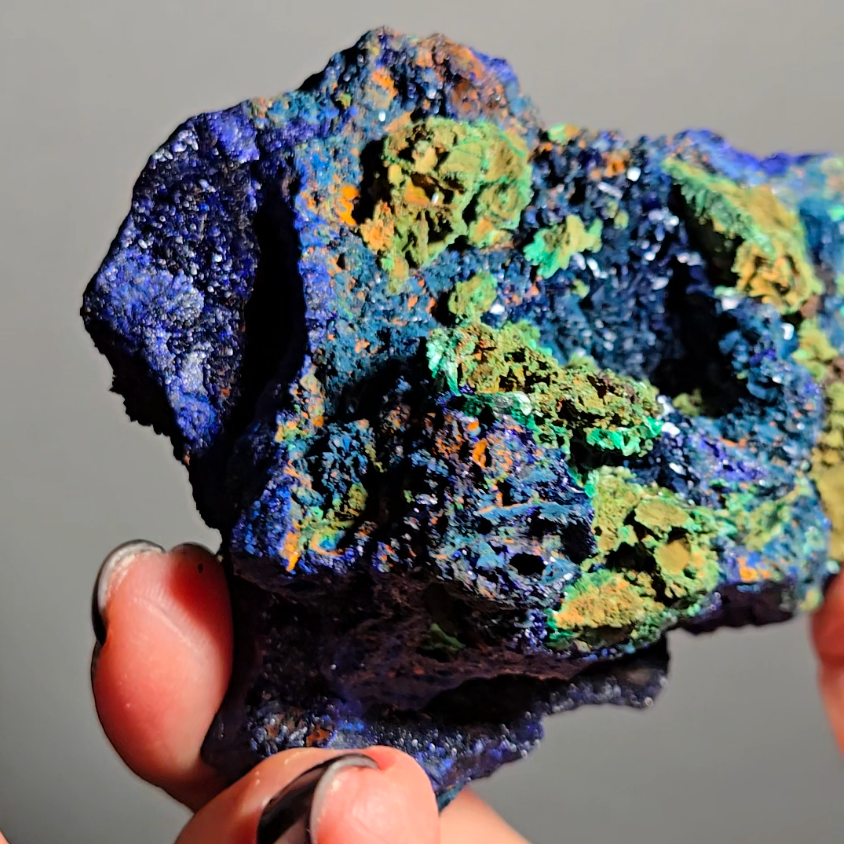
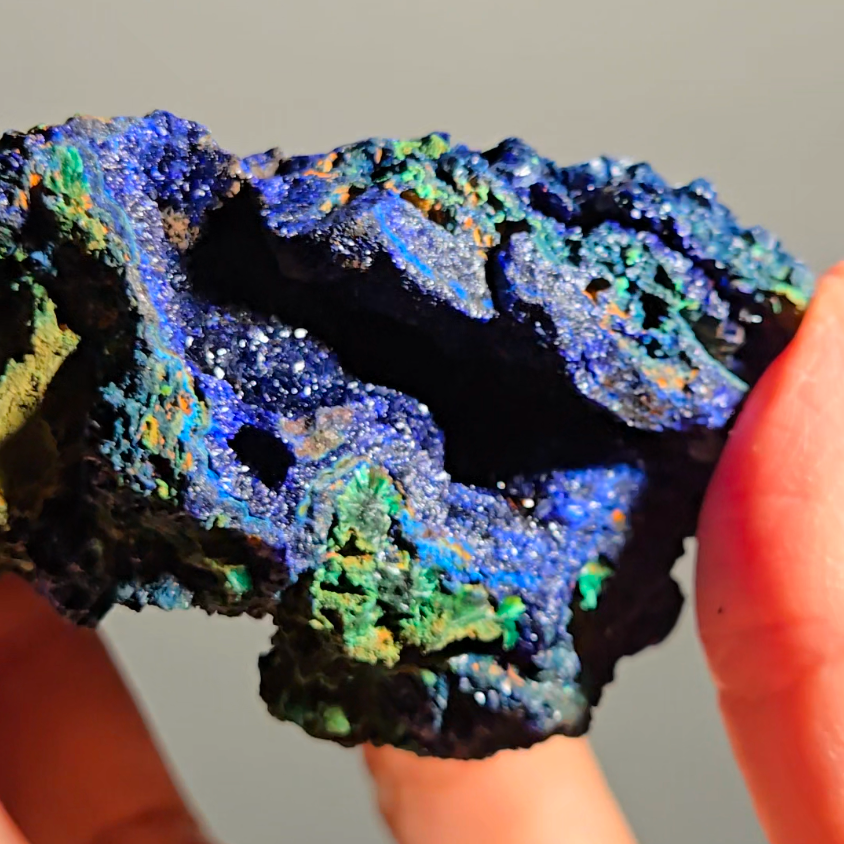
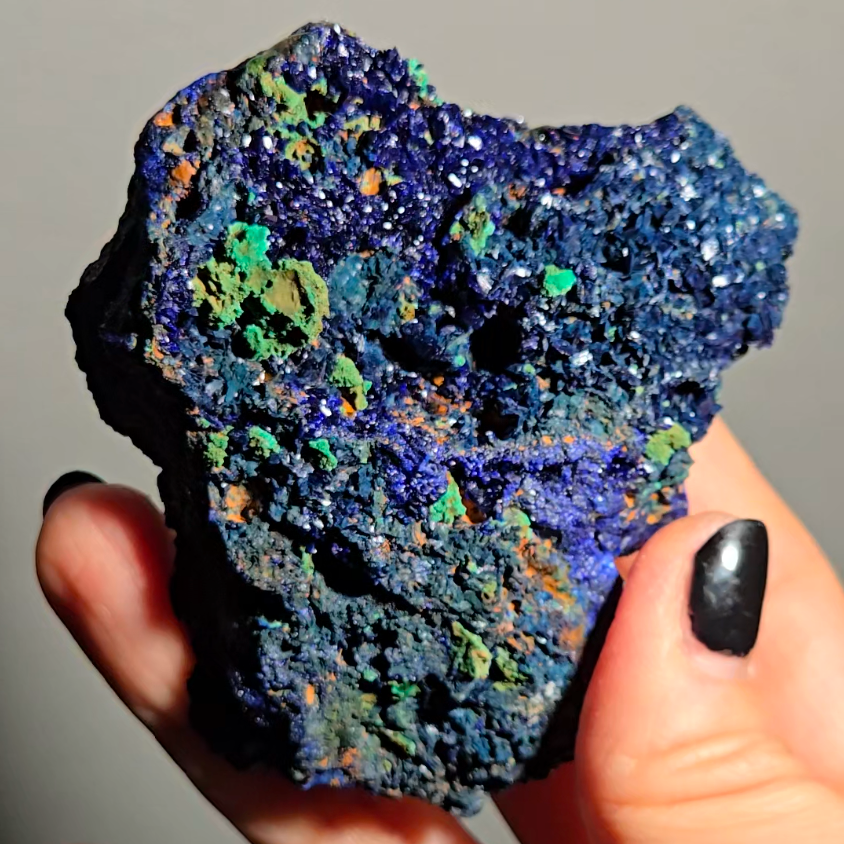
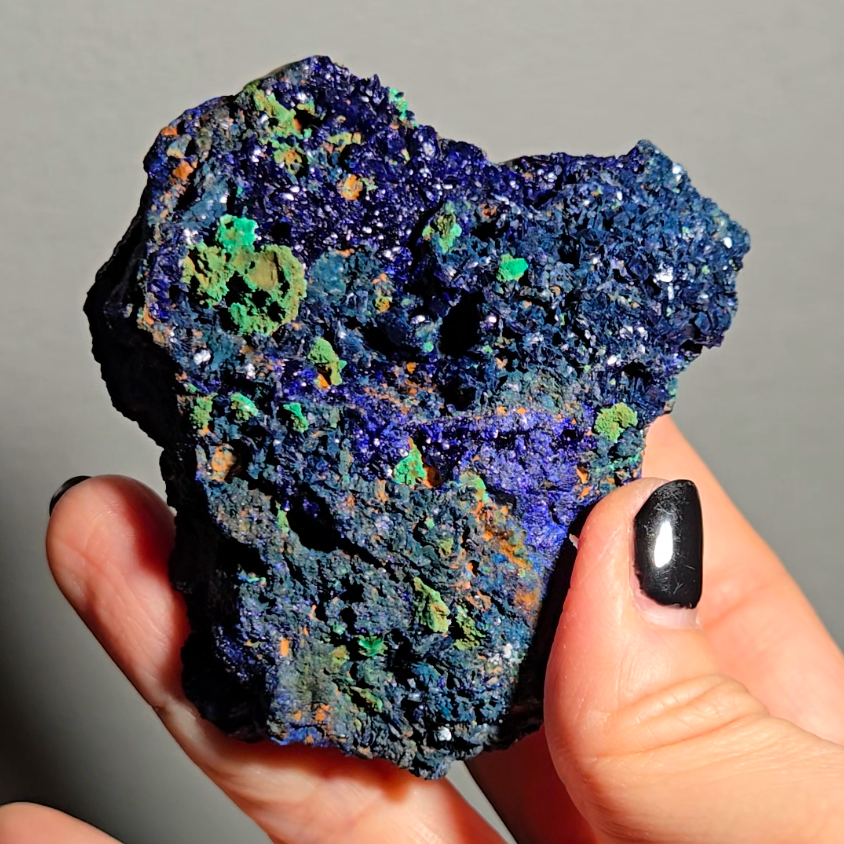
Azurite is strongly associated with insight, mental clarity, and communication because of its connection to the third eye and throat energy centres. In this specimen, azurite works alongside malachite and chrysocolla, creating a layered copper-mineral piece for focus, expression, and emotional integration.
- Supports clear communication and intuitive awareness
- Used for throat chakra and third eye chakra work
- Encourages emotional honesty with grounded presence
- Suitable for collectors of copper mineral specimens
The combination of azurite, malachite, and chrysocolla gives this piece more energetic range than a single-mineral specimen. It brings together insight, transformation, and calm expression in one visually assertive formation.
How does azurite compare to lapis lazuli for insight?
Azurite and lapis lazuli are both chosen for insight, truth, and mental clarity, but they differ in mineral character and energetic feel. Azurite has a sharper copper-based intensity, while lapis lazuli carries a steadier, more traditional wisdom association.
- Choose azurite for intuitive focus and mental clarity
- Choose lapis lazuli for truth, wisdom, and composed expression
- Choose chrysocolla for calm communication and emotional balance
- Choose malachite for transformation, protection, and release work
For buyers seeking a more dynamic specimen, azurite malachite chrysocolla offers stronger colour contrast and mineral complexity. It is especially suitable when communication work needs both clarity and emotional grounding.
Why choose China azurite for maximum insight?
Chinese azurite specimens are valued for strong copper-mineral colour, natural matrix texture, and association with malachite and chrysocolla in oxidation zones. This specimen carries confirmed Chinese origin with deep blue azurite, green malachite, and blue-green chrysocolla.
- Confirmed Chinese origin
- Deep blue azurite with green malachite
- Blue-green chrysocolla across natural matrix
- Copper mineral specimen suited to display and study
The collector appeal lies in the mineral relationship. Azurite and malachite are copper carbonates, while chrysocolla is a hydrated copper silicate, giving the specimen geological depth as well as strong visual contrast.
How to use azurite for communication and balance?
Use azurite malachite chrysocolla as a placement crystal for communication, emotional balance, and intuitive focus. Because these copper minerals can be softer and surface-sensitive, this piece is best kept for display or careful altar work rather than frequent handling.
- Place it near a workspace for clear expression and focused thought
- Use it on an altar for throat and third eye chakra practice
- Keep it near a journal for honest reflection and decision-making
- Display it where the blue and green copper minerals remain visible
Avoid water cleansing, salt, or heavy handling. Use smoke, sound, selenite, or dry energetic cleansing methods to preserve the mineral surface.
Key questions about azurite properties and uses
What is azurite used for?
Azurite is used for intuition, communication, mental clarity, third eye work, and focused spiritual reflection.
What does malachite add to azurite?
Malachite adds transformation, protection, emotional release, and grounding, balancing azurite’s sharper intuitive energy.
What is chrysocolla good for?
Chrysocolla supports calm communication, emotional balance, feminine expression, and steady throat chakra work.
Can azurite malachite chrysocolla go in water?
No. Avoid water because these copper minerals can be soft, porous, and sensitive to surface damage.
Is this a collector mineral specimen?
Yes. Its Chinese origin, copper-mineral mix, strong colour contrast, and natural matrix make it suitable for collectors.